NewsFlash Articles
Qatar partners with international studios in bid to reshape Arab film industry
25 Nov 2025 | Category: News
Source: The National November 23, 2025
A new 50 per cent national rebate scheme has also been announced, placing it alongside Abu Dhabi’s and above Saudi Arabia’s in headline value
Qatar has set out a new plan to grow film production in the Middle East and North Africa, announcing long-term partnerships with several international companies and launching a new national rebate scheme.
The work is being led by a new Film Committee at Media City Qatar, which will handle financing, development and production support.
Sony Pictures, Neon, Miramax, Parrot Analytics and Company 3 all confirmed new or expanded operations in Qatar during the 15th Doha Film Festival, forming the first group of international companies attached to the Film Committee’s wider strategy.
Miramax, Parrot Analytics and Company 3 did not release full details of their operations, but were named as early partners establishing a foothold in Doha.
Two of the partnerships have been outlined in more detail. Neon – the American independent studio and distributor behind Academy Award-winning films Anora and Parasite – has signed a four-year agreement to co-develop and co-finance between six and 10 films and short projects.
Each will be Arabic-language or regionally-inspired stories, and Neon will distribute them globally. The films will be selected and developed with the Film Committee, rather than through an open submissions process.
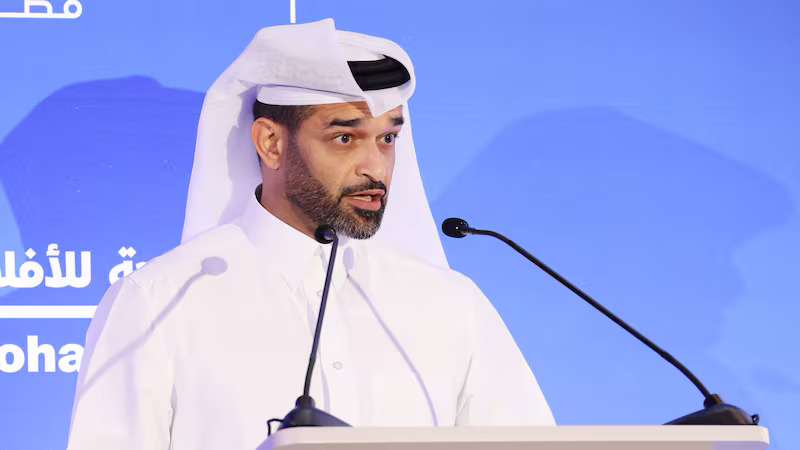
“This agreement is about more than financing films – it’s about creating a new platform for Arabic and regional storytelling,” said Film Committee chairman Hassan Al Thawadi.
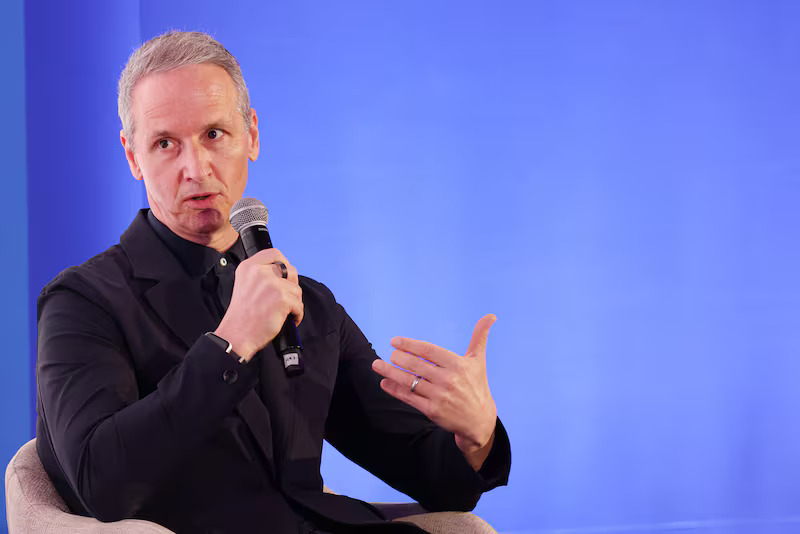
Neon founder and chief executive Tom Quinn said the collaboration continues the company's established push to increase the profile of international cinema. The company was also behind the award-winning French legal drama Anatomy of a Fall and the German-Japanese film Perfect Days.
“Our partnership gives us the opportunity to elevate an even richer diversity of filmmaking for audiences around the world,” said Quinn.
Sony Pictures International Productions has also signed a multi-year deal to develop Arabic-language films from across the Mena region.
Like the Neon agreement, the films will be chosen with the Film Committee and produced through an approved local producer. Sony will also handle global distribution. This is not an open call either, but a curated slate built with the committee.
Sony executive Steven O’Dell said the Middle East remains “one of the most dynamic and rapidly growing regions in entertainment”.
Alongside the studio deals, Qatar has introduced the Qatar Screen Production Incentive. The rebate offers up to 50 per cent back on qualifying costs, with a 40 per cent base rebate and an additional 10 per cent available for hiring Qatari talent, providing training or promoting local culture.
Qatar previously had no national rebate scheme, relying instead on selective grants, making the new programme its first formal cash incentive and immediately placing it alongside Abu Dhabi’s and above Saudi Arabia’s in headline value.
Up to a quarter of a project’s spend can occur in selected neighbouring Arab countries while still qualifying. Only Qatari-registered companies can apply, meaning international productions must partner with a local entity. Applications open in the second quarter of 2026.
“The programme reflects our long-term commitment to developing a creative economy that blends cultural authenticity with global ambition,” Al Thawadi said.
The committee also acquired the life rights to the story of “Caesar”, the Syrian military defector who smuggled evidence of torture out of Damascus. The story will be developed with Department M, Katara Studios and Neon as a feature film, documentary, series and podcast.
Mike Larocca, co-Founder of Department M, said the story “has the depth, scale, and global relevance to make for a great film”.
Together, the studio partnerships, the incentive and the early development projects form the basis of a new production model centred on development and financing rather than location shooting.
The approach gives Qatar, which has long supported Arab cinema through the Doha Film Institute, links to established distributors, post-production services and analytics firms, while offering regional filmmakers a more structured route into international partnerships.
Share this post: